
The Future of Digital Marketing Agencies in the Age of AI Agents
The digital marketing agency model hasn't fundamentally changed in two decades. Agencies hire people, bill hours, and scale by adding headcount. That model is now breaking — and AI agents are the force behind it.
We're not talking about agencies using ChatGPT to write blog posts. We're talking about autonomous AI agents that monitor campaigns 24/7, optimise ad spend in real time, generate reports without being asked, and execute multi-step marketing workflows while the team sleeps.
This isn't a future prediction. It's already happening. At Sphere Agency, we run three AI agents that handle marketing performance, operations, and revenue intelligence across our client portfolio. The results have fundamentally changed how we operate — and what we can offer clients.
How AI Agents Are Changing the Agency Model
Traditional agencies operate on a simple equation: more clients = more staff = higher overhead. AI agents break that equation entirely.
From Hourly Billing to Outcome-Based Value
When an AI agent can monitor 50 ad accounts simultaneously, flag anomalies at 3 AM, and generate performance reports in seconds, the value of an agency shifts from labour to expertise. Clients don't care how many hours you spent — they care about ROAS, CPA, and revenue growth.
Agencies running AI agents can:
React faster — AI agents detect performance drops within minutes, not days
Scale without proportional headcount — one strategist with AI agents can manage what previously required a team of five
Deliver 24/7 monitoring — no more "we'll check Monday morning" while weekend campaigns bleed budget
Reduce human error — automated QC processes catch mistakes before they cost money
The New Agency Stack
Forward-thinking agencies in 2026 are building a new technology stack that includes:
Autonomous marketing agents — handling campaign monitoring, reporting, and optimisation tasks
Operations agents — managing scheduling, client communication workflows, and project tracking
Revenue intelligence agents — tracking market opportunities, competitor movements, and pricing signals

Human strategists — focusing on creative direction, client relationships, and high-level strategy
The key insight: AI doesn't replace the agency. It replaces the busywork that prevents agencies from doing their best strategic work.
What Agencies Need to Adapt Right Now
The agencies that will dominate the next five years aren't necessarily the biggest or the most established. They're the ones making these shifts today.
1. Invest in AI Infrastructure, Not Just AI Tools
There's a massive difference between an agency that uses ChatGPT and one that runs autonomous AI agents. Using AI tools is table stakes. Building AI infrastructure — agents that operate independently, learn from your data, and execute without constant prompting — is the competitive moat.
2. Redesign Workflows Around Human-AI Collaboration
The worst mistake agencies make is bolting AI onto existing processes. Instead, redesign workflows from scratch:
AI handles — data collection, pattern recognition, routine optimisation, reporting, monitoring
Humans handle — creative strategy, client relationships, brand positioning, crisis management, ethical judgment
Both collaborate on — campaign strategy, audience insights, performance analysis, budget allocation
3. Develop AI Management as a Core Competency
Running AI agents effectively is a skill. It requires understanding prompt engineering, agent configuration, safety protocols, and performance measurement. Agencies that develop this competency first will have an enormous head start.
4. Rethink Pricing Models
If AI agents let you deliver better results with less human time, hourly billing punishes efficiency. Progressive agencies are shifting to:
Performance-based pricing — tied to actual business outcomes
Retainer + performance bonuses — base fee for access, bonuses for exceeding targets
AI-as-a-service tiers — different levels of AI agent access and monitoring
New Service Opportunities for AI-powered Agencies
AI agents don't just improve existing services — they create entirely new revenue streams.
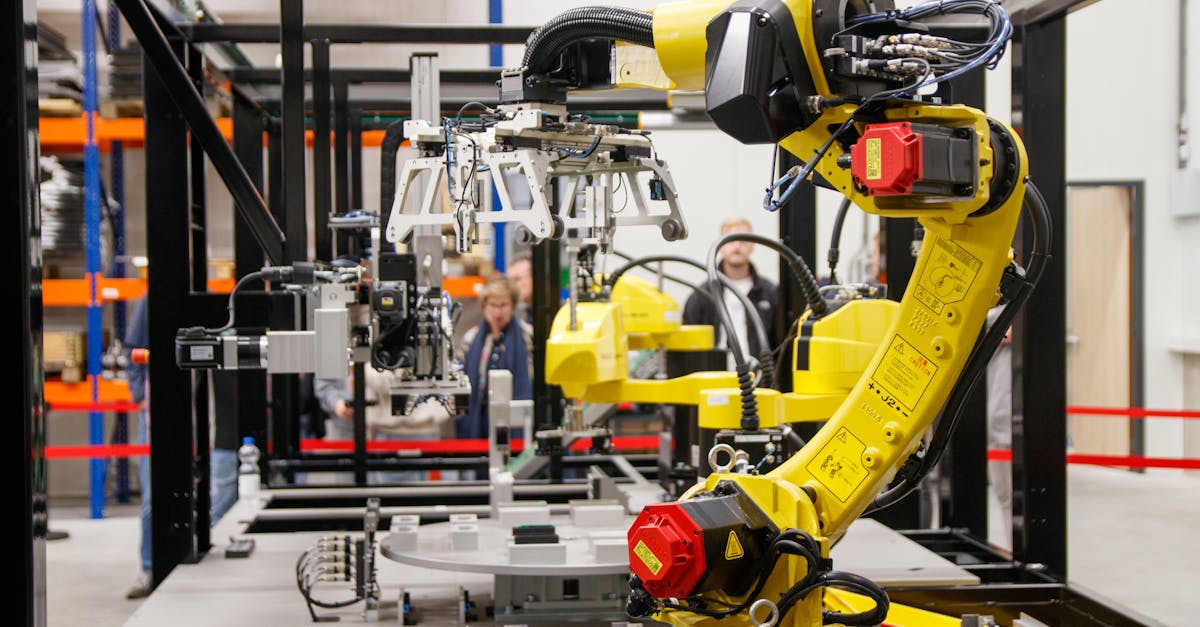
AI Agent Setup and Configuration
Most businesses want the benefits of AI agents but lack the technical expertise to deploy them. Agencies that can set up, configure, and customise AI agents for clients open a high-margin service line. This includes agent personality design, workflow automation, tool integration, and safety configuration.
AI Agent Management and Optimisation
Like any system, AI agents need ongoing management. They need to be monitored, their outputs quality-checked, their configurations updated as business needs evolve. This is a recurring revenue opportunity that scales efficiently.
AI-Enhanced Analytics and Insights
AI agents can process data volumes that would take human analysts weeks. Agencies offering AI-powered competitive intelligence, market analysis, and predictive analytics command premium pricing because the insights are deeper and faster.
Training and Consulting
Businesses want to understand AI but don't know where to start. Agencies with hands-on experience running AI agents can offer training programs, workshops, and consulting that go beyond theory — because they've actually done it.
Which Agencies Will Thrive — and Which Will Die?
Let's be direct about who survives this transition.
Agencies That Will Thrive
Early AI adopters — agencies already running autonomous agents, not just experimenting with chatbots
Boutique agencies with technical depth — small teams that combine marketing expertise with AI infrastructure
Performance-obsessed agencies — those who measure everything and let data drive decisions, because AI amplifies data-driven cultures
Agencies that invest in proprietary systems — custom agent configurations, workflows, and knowledge bases become competitive moats
Agencies That Will Struggle
Headcount-dependent agencies — those whose only scaling mechanism is hiring more people
Agencies selling hours, not outcomes — AI makes the "hours worked" metric irrelevant
Agencies ignoring AI — claiming "our clients don't need it" or "it's just a trend"
Agencies using AI superficially — putting "AI-powered" on their website while just using ChatGPT for copywriting
The dividing line is simple: agencies that adopt AI eat agencies that don't. It's not about replacing humans — it's about augmenting human expertise with AI capabilities that create an unfair advantage.

The 5-Year Outlook: What Marketing Agencies Look Like in 2031
Based on the trajectory we're seeing today, here's what the agency landscape looks like by 2031:
Smaller Core Teams, Bigger Output
The average agency team size will shrink, but output per person will multiply. A 10-person agency with AI agents will outperform a 50-person agency without them — in speed, accuracy, and results.
AI Agents as Standard Infrastructure
By 2031, asking "does your agency use AI agents?" will be like asking "does your agency use email?" today. It'll be assumed. The competitive advantage will shift to how well agencies configure, manage, and optimise their AI infrastructure.
New Specialisations Will Emerge
AI Agent Strategists — professionals who design and optimise marketing agent workflows
Human-AI Collaboration Designers — specialists who architect how teams and agents work together
AI Quality Assurance — roles focused on ensuring AI agent outputs meet brand and accuracy standards
AI Ethics Officers — as AI agents make more decisions, someone needs to ensure they align with brand values
Client Expectations Will Shift Permanently
Clients will expect real-time performance data, 24/7 campaign monitoring, and instant optimisation. They won't accept "we'll review it next week" when they know AI can review it in seconds. Agencies that can't meet these expectations will lose clients to those that can.
How Sphere Agency Is Leading This Transition
We didn't wait for the industry to figure this out. Sphere Agency has been running autonomous AI agents across our operations since before it was trendy. Our agents handle campaign monitoring, performance analysis, operations management, and revenue intelligence — while our human team focuses on the creative strategy and client relationships that actually move the needle.
The result: faster response times, deeper analytics, fewer errors, and better outcomes for our clients. Not because we replaced humans with AI, but because we gave our humans AI superpowers.
What This Means for Your Business
If you're working with a digital marketing agency — or choosing one — the question isn't whether they use AI. It's how deeply AI is integrated into their operations. Surface-level AI use is meaningless. Autonomous agents running 24/7 across your campaigns? That's a competitive advantage that directly impacts your bottom line.
The future of digital marketing agencies isn't about AI replacing humans. It's about AI-augmented teams delivering results that purely human teams simply cannot match.
Want to work with an agency that's already living in that future? Get in touch with Sphere Agency — we'd love to show you what AI-powered marketing actually looks like.
Related Resources
Frequently Asked Questions
What is digital marketing?
Digital marketing encompasses all marketing efforts using digital channels — search engines, social media, email, websites, and apps. It includes SEO, paid advertising, content marketing, and social media marketing.
Which digital marketing channel should I start with?
Start with the channel where your customers already spend time. For most Thai businesses, Google (search) and Facebook/Instagram (social) deliver the best initial ROI. Add channels as you scale.
How can AI agents help my marketing?
AI agents automate repetitive marketing tasks like data analysis, reporting, content scheduling, and campaign optimization. They free up your team to focus on strategy and creativity while maintaining 24/7 operational efficiency.
Is AI marketing safe for my business data?
With proper security measures — encrypted credentials, role-based access, audit logs, and data isolation — AI marketing tools are safe. Choose platforms with enterprise-grade security and transparent data handling policies.